
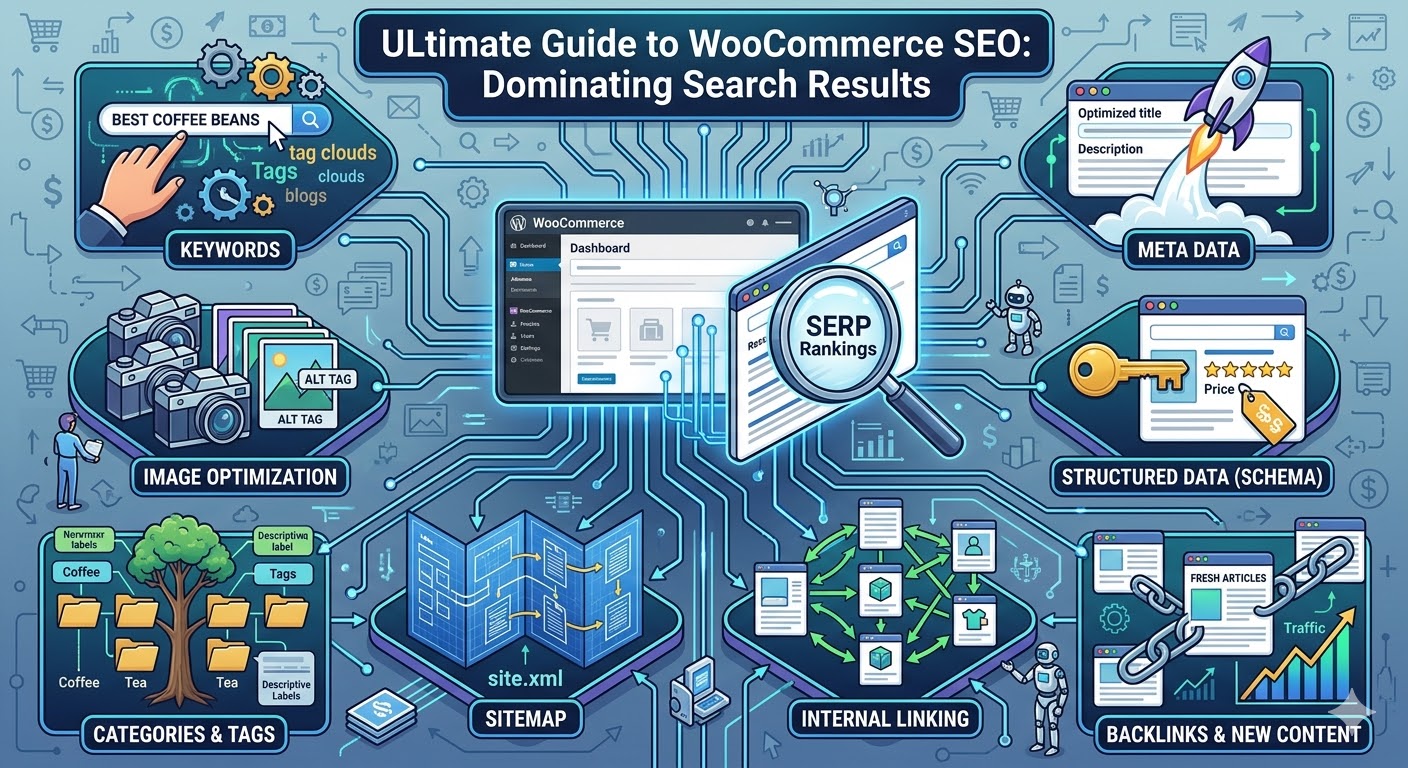
WooCommerce SEO is the strategic process of making your online store more visible on search engine results pages (SERPs). For small business owners, this isn’t just about rankings; it’s about ensuring that when a potential customer searches for a product you sell, your store is the first one they see. By fine-tuning your site’s structure and content, you bridge the gap between your inventory and your target audience.
Proven Strategies to Boost Your WooCommerce Rankings For Your Website in Durban
1. Master Your Keywords
The foundation of on-page SEO lies in your page titles and meta descriptions. Instead of generic titles, use high-intent, keyword-rich phrases that describe exactly what you’re selling. A well-crafted meta description acts as your “organic ad,” encouraging users to click through by clearly stating the value of your page.
2. Prioritize Image Optimization
High-quality visuals sell products, but they can also slow down your site if not handled correctly. Image optimization involves using descriptive, keyword-focused file names and alt tags. This helps search engines “read” your images and can even land your products in Google Image Search results, all while keeping your page load speeds lightning-fast.
3. Leverage Structured Data (Schema)
Structured data, or schema markup, provides search engines with a roadmap of your content. WooCommerce has native support for this, allowing search engines to display “rich snippets” like product prices, star ratings, and stock availability directly in the search results. This extra detail significantly boosts your click-through rate.
4. Utilize XML Sitemaps
A sitemap is essentially a directory of every important page on your store. By generating and submitting a sitemap to tools like Google Search Console, you ensure that search engine bots can find, crawl, and index your entire product catalog efficiently—a must-have for stores with extensive inventory.
5. Strengthen Your Internal Linking
Internal linking is the practice of connecting one page of your site to another. By linking related products or blog posts, you help distribute “link equity” across your site and guide search engines through your site’s hierarchy. It also keeps customers browsing longer, which is a positive signal to Google.
6. Optimize Categories and Tags
Don’t ignore your WordPress categories and tags. These should be more than just organizational tools; they should be keyword-optimized landing pages. Ensure your category descriptions are informative and relevant to the products within them to help search engines understand your store’s niche.
7. Expand Your Reach with Social Media
While social media signals aren’t a direct ranking factor, the traffic and brand awareness they generate are invaluable. Sharing product links and encouraging user-generated content increases your store’s digital footprint, leading to more brand searches and potential natural backlinks.
8. Monitor Performance via Analytical Platforms
You can’t manage what you don’t measure. Using analytical platforms like Google Analytics and Search Console allows you to track your store’s performance. These insights help you identify which keywords are driving sales and which pages need a bit more SEO love.
9. Publish Fresh, Engaging Content
Search engines favour active websites. Regularly updating your store with new content—whether it’s new product arrivals, customer reviews, or informative blog posts—signals that your business is thriving. This consistency keeps your site relevant in the eyes of both users and algorithms.
10. Build High-Quality Backlinks
Backlinks remain one of the most influential ranking factors. When reputable websites link back to your store, they act as a “vote of confidence.” Building a diverse profile of authoritative backlinks proves to search engines that your content is valuable, significantly boosting your overall domain authority.
Conclusion
Mastering WooCommerce SEO is a marathon, not a sprint. By focusing on these core pillars—from technical structured data to high-quality content—you can build a sustainable stream of organic traffic that grows alongside your business.